
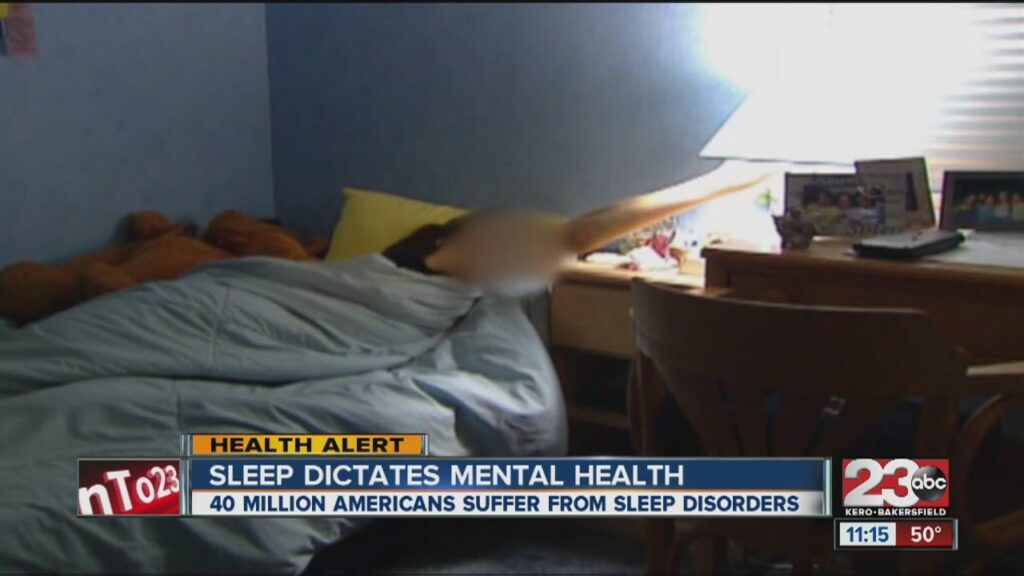
Dr. Weeks’ Comment: AI reminds us that: “Sleep deprivation psychosis is a temporary state where extreme lack of sleep causes the brain to lose touch with reality, resulting in symptoms that mimic acute psychosis or schizophrenia. While 24 hours without sleep can trigger early signs like irritability and cognitive decline, severe symptoms such as hallucinations, delusions, and paranoia typically emerge after 48 to 72 hours of wakefulness.”
It is also an established form of torture. Sleep deprivation is one of the most widely used forms of torture and coercive interrogation. It is favored because it leaves no physical marks, which is why it is often grouped under “white” or “clean” torture.
Historical and documented use
- Soviet NKVD/KGB. The “conveyor” method used rotating interrogators to keep prisoners awake for days. Menachem Begin, who was held by the NKVD, described it in his memoir White Nights.
- Britain, Northern Ireland, 1971. Sleep deprivation was one of the “Five Techniques,” alongside hooding, noise, stress positions and food or drink deprivation. In Ireland v. UK (1978), the European Court of Human Rights ruled these inhuman and degrading treatment, though it stopped short of calling them torture.
- Israel. The Israeli Supreme Court restricted interrogation-related sleep deprivation in a 1999 ruling.
- United States, after 9/11. The CIA’s “enhanced interrogation” program authorized sleep deprivation for up to 180 hours, often with detainees shackled standing. The 2014 Senate Intelligence Committee report documented hallucinations and other psychological effects. Military detention sites used similar methods, such as Guantánamo’s “frequent flyer” program of repeated cell moves.
- It has also been widely documented in reports on authoritarian regimes, including China, North Korea, Syria and Iran.
Sleep Deprivation’s key characteristics include:
- Progressive Symptoms: Perceptual distortions and anxiety start within 24–48 hours, evolving into complex hallucinations and disordered thinking by 48–90 hours, with full psychosis resembling toxic delirium appearing after 5 days.
- Reversibility: Unlike primary psychotic disorders, these symptoms are generally reversible and resolve after a period of restorative sleep, though recovery may take longer than the duration of sleep loss.
- Risk Factors: Prolonged insomnia is a known precursor to psychotic episodes in individuals with existing mental health conditions like bipolar disorder or schizophrenia, and sleep loss can also trigger subclinical psychotic experiences in healthy individuals.
As a consulting psychiatrist, I am often asked to offer a second opinion when a person is admitted to a psychiatric ward. A typical case would involved my sharing the following with the treating psychiatrist:
Dear Dr ____
As you assess the patient, please understand that, in my opinion, his diagnosis is not bipolar or schizoaffective disorder (i.e. not a mental illness), but rather he had acute decompensation (what we used to call a ‘nervous breakdown’) from being overstressed and sleep deprived. Hence, in my opinion, the diagnosis which best fits his situation is “sleep deprivation psychosis”. Again, this is not a mental illness, rather it is a stress response from excessive adrenalin caused in great part by sleep deprivation. Anyone – you or I, who experienced five nights of sleep deprivation would experience the same psychosis. Allow me to refer you below to the extensive research done on the fittest of the fit, Navy SEALs, regarding sleep deprivation, and how the Navy SEALs become psychotic after just two nights of no sleep. (please see below).
While I appreciate the initial role of Zyprexa (a sedating antipsychotic which is the standard of care), I hope that you will consider that the main therapeutic goal is to get him sleeping again. We need to put him to sleep and keep him asleep allowing him to have a good restorative night’s sleep. The daytime should be non-stressful followed again by healing sleep. Sleep is the goal in this case and the literature suggests that sometimes sleep restoration alone is sufficient.
It is a well-known physiologic fact that the physical body needs to be relaxed before the mind releases and goes to sleep. To that end, I hope you will use the muscle relaxant magnesium chelate before sleep – 500mg and increase to bowel tolerance. Also quite helpful helpful are GABA enhancing agents like GABA itself (450mg three times a day and again at bedtime) coupled with a beta blocker like bioidentical progesterone (prescription form of Prometrium), whose primary metabolite is a powerful, safe and effective hypnotic agent called alopregnenolone. A prescription item like the beta blocker Propranolol to lower her stress experience would also help her sleep. The above remedies have a very safe risk/benefit ratio and no worrisome side-effects in contrast to most psychiatric meds. SSRI cause sleep disruption by creating a fugue state and neuroleptics, as the name itself implies, are not benign. If safer and as effective natural remedies are available, it might serve the patient better to offer these first.
This patient is quite remarkable. He is highly sensitive, compassionate to the detrimental degree that empaths like him take on other people’s pain, and compounding all is how conscientious he is being driven by a very unforgiving work ethic. He is quite high functioning and tends to bite off more than he can chew at times so, upon recovery, he will need to change his lifestyle to be more supportive of his own needs and learn to pace himself. Above all, he must learn to end each day at a reasonable bedtime and not pull and further all nighters.
Here below, for your consideration, is just one of many articles on sleep deprivation psychosis. Note that when this happens, even to high functioning Navy seals, it is not considered a mental illness, but rather a temporary biochemical consequence of excessive stress. It can happen to anybody and your clarifying this fact with the patient helps reduce stigma for him. That is an important component of his recovery and his return to full function.
Thank you again for your care of this remarkable young man.
Please call me with any questions.
Bradford S. Weeks, MD
ARTICLE:
SEVERE SLEEP DEPRIVATION CAUSES HALLUCINATIONS
https://pmc.ncbi.nlm.nih.gov/articles/PMC6048360/
Front Psychiatry . 2018 Jul 10;9:303. doi: 10.3389/fpsyt.2018.00303
Severe Sleep Deprivation Causes Hallucinations and a Gradual Progression Toward Psychosis With Increasing Time Awake
Flavie Waters 1,2, Vivian Chiu 1,3, Amanda Atkinson 2, Jan Dirk Blom 4,5,6,*
PMCID: PMC6048360 PMID: 30042701
Abstract
Background: Going without sleep for long periods of time can produce a range of experiences, including perceptual distortions and hallucinations. Many questions, however, remain unanswered regarding the types of symptoms which are most reliably elicited, the time of symptom onset, and whether symptoms worsen over time toward psychotic decompensation. Since sleep deprivation exceeding 48 h is considered unethical today, an examination of historical studies with extreme sleep-loss duration is needed to obtain information about what happens during prolonged sleep loss.
Methods: A systematic-review approach was used to identify experimental and observational studies of sleep deprivation in healthy people which describe the effects of prolonged sleep loss on psychopathological symptoms, without any date restriction.
Results: A total of 476 articles were identified. Of these, 21 were eligible for inclusion. Duration of sleep loss ranged between 24 h and 11 nights (total 760 participants; average 72–92 h without sleep). All studies except one reported perceptual changes, including visual distortions (i.e., metamorphopsias), illusions, somatosensory changes and, in some cases, frank hallucinations. The visual modality was the most consistently affected (in 90% of the studies), followed by the somatosensory (52%) and auditory (33%) modalities.
Symptoms rapidly developed after one night without sleep, progressing in an almost fixed time-dependent way. Perceptual distortions, anxiety, irritability, depersonalization, and temporal disorientation started within 24–48 h of sleep loss, followed by complex hallucinations and disordered thinking after 48–90 h, and delusions after 72 h, after which time the clinical picture resembled that of acute psychosis or toxic delirium. By the third day without sleep, hallucinations in all three sensory modalities were reported. A period of normal sleep served to resolve psychotic symptoms in many—although not all—cases.
Conclusions: Psychotic symptoms develop with increasing time awake, from simple visual/somatosensory misperceptions to hallucinations and delusions, ending in a condition resembling acute psychosis. These experiences are likely to resolve after a period of sleep, although more information is required to identify factors which can contribute to the prevention of persistent symptoms.
SLEEP DEPRIVATION NAVY SEAL STUDY
U.S. Navy Medical Neuro-psychiatric Research Unit in San Diego.
* Day 2: Difficulty focusing eyes and signs of astereognosis (difficulty recognizing objects by touch).
* Day 3: Moodiness, some signs of ataxia (inability to repeat simple tongue twisters).
* Day 4: Irritability and uncooperative attitude, memory lapses and difficulty concentrating. Gardner’s first hallucination was that a street sign was a person, followed by a delusional episode.
* Day 5: More hallucinations (e.g., seeing a path extending from the room in front of him down through a quiet forest). These were sometimes described as “hypnagogic reveries” since Gardner recognized, at least after a short while, that the visions were illusionary in nature.
* Day 6: Speech slowing and difficulty naming common objects.
THINK “NERVOUS BREAKDOWN” not MENTAL ILLNESS
FACT: Things Break Down when stressed
If you don’t take care of things, they break down.
If you stress something too much, it breaks down.
Even high-performance luxury vehicles like Ferrari and Rolls Royce cars break down!
Don’t drive a Ferrari off-road.
What is a “nervous breakdown”?
“A nervous breakdown is a temporary state of incapacitation due to excessive stress coupled with inadequate coping ability”. This definition is critical because it destigmatizes the nervous breakdown. It can happen to anybody – you and me – if we push ourselves too hard. It’s also temporary and if one improves one’s lifestyle, one reduces the risk of it happening again. Simple. Not mysterious.
We all have a breaking point, but those of us who are more sensitive, perceptive and empathic, and who take on more of the challenges of the world tend to experience more stress and therefore, are more susceptible to a nervous breakdown.
So what happens when someone has a nervous breakdown? What is a “breaking point” bio-chemically speaking? Dr. Abram Hoffer, a pioneering orthomolecular psychiatrist from Canada clarified this in 1952. I knew Dr. Hoffer and met many of the hundreds of schizophrenics he successfully treated but his disruptive work has never been validated in large peer-reviewed studies. Hoffer is credited with fueling the broader concept that oxidative stress and catecholamine oxidation products contribute to schizophrenia neurobiology and this remains an active, legitimate research area. So while the Adrenochrome Hypothesis has been utilized clinically by orthomolecular psychiatrists for 60 years, the lack of adequate funding for a non-patentable treatment (such as B and C vitamins) has resulted in the specific Adrenochrome Hypothesis foundering.
HALLUCINOGENS AS HARD SCIENCE: The Adrenochrome Hypothesis for the Biogenesis of Schizophrenia
May 2010 13(2):178-195 DOI:10.1037/a0019394
Working in a psychiatrically innovative environment created by the Government of Saskatchewan, Canada, Abram Hoffer and Humphry F. Osmond enunciated the adrenochrome hypothesis for the biogenesis of schizophrenia in 1952, slightly later proposing and, apparently, demonstrating, in a double-blind study, that the symptoms of the illness could be reversed by administering large doses of niacin. After placing the hypothesis within its ideological framework, the author describes its emergence and elaboration and discusses the empirical evidence brought against it. Hoffer’s idiosyncratic diagnostic procedures, especially his creation and use of a supposed biochemical marker for schizophrenia, are examined. The author argues that Hoffer’s conceptualization of schizophrenia, as well as his treatment approach, depended on a tautology. Following David Healy, the author treats the adrenochrome hypothesis as a version of a transmethylation theory, thus incorporating it into mainstream psychopharmacology.
What I tell my patients: “You are not mentally ill. You had a nervous breakdown because you were intoxicated with too much adrenaline which had been oxidized to adrenochrome which is a naturally occurring hallucinogenic substance. In a very real sense, you “drove yourself crazy” by not sleeping and being under so much stress.
Therapeutically, we need to lower your stress by lowering your adrenalin. If we do this, we will lower your psychosis-creating adrenochrome. This can be accomplished with two simple, inexpensive, safe and non-addictive biochemical steps. #1) niacinamide (the non-flushing vitamin B3) 500 mg three times a day which blocks the conversion of noradrenaline into adrenaline. This will lessen your adrenaline. At the same time, #2) we prevent the oxidization of your adrenaline to the hallucinogenic adrenachrome by giving you the antioxidant vitamin C (ascorbic acid) 1 gram three times a day – increasing to bowel tolerance remembering too much vitamin C can loosen the stools.
Other nutrients are very helpful like bioidentical progesterone which blocks adrenaline being itself a beta blocker. Magnesium chelate relaxes muscles and helps sleep. Melatonin at a high dose (60 mg) can be neuro-protective and also facilitate sleep if taken before bed. Using blue blocking glasses in the evening is beneficial so that screen time after dinner does not interrupt your circadian rhythms. Gentle rhythmic exercise including yoga, stretching and walking is highly beneficial.
If psychotic symptoms persist after achieving consistent, restorative sleep, then variety of blood tests, including hormonal status and neurotransmitter status are recommended to see what else is imbalanced in this suffering person.
YOU TUBE VIDEOS ON SLEEP DEPRIVATION
NIGHT SHIFT
https://www.youtube.com/watch?v=PTEtDNLB3QQ
11 NIGHTS of NO SLEEP
https://www.youtube.com/watch?v=dqONk48l5vY
DEEPER DIVE:
Inquiring of Open Access: “What is the mechanism of action whereby sleep deprivation causes psychosis?”
Sleep deprivation precipitates psychotic symptoms primarily through a transient hyperdopaminergic state and glutamatergic/NMDA dysregulation, amplified by affective and circadian mechanisms—a convergence onto the same dopamine-glutamate circuitry implicated in schizophrenia. Experimentally, total sleep deprivation or sleep restriction produces dose-dependent perceptual distortions, paranoia, hallucinations, and cognitive disorganization in healthy people that qualitatively resemble positive, negative, and cognitive symptoms of schizophrenia, and symptoms can appear after a single night of restriction (≤4 h). No single pathway fully accounts for this; the leading mechanisms are outlined below.
1. Dopaminergic dysregulation (the most direct psychosis link)
- Increased striatal/thalamic dopamine release. PET studies show one night of sleep deprivation reduces [11C]raclopride binding to D2/D3 receptors in the striatum and thalamus—interpreted as increased endogenous dopamine—without changing dopamine transporter binding, implying enhanced dopamine cell firing/release rather than reduced reuptake. This increase correlated with fatigue and cognitive deterioration.
- Receptor downregulation. The same work and subsequent reviews describe downregulation of striatal D2/D3 receptor availability after ~24 h of wakefulness, mirroring patterns seen in addiction.
- Hyperdopaminergic behavioral state. In rodents, 72 h of sleep deprivation produces a hyperdopaminergic phenotype with heightened sensitivity to novelty and amphetamine, altered striatal dopamine receptor expression, and increased prefrontal tyrosine hydroxylase (greater dopamine synthesis capacity)—the same mechanistic signature underlying stimulant-induced and schizophrenic psychosis.
This transient excess of mesolimbic/striatal dopamine is mechanistically analogous to the dopaminergic overactivity that drives positive psychotic symptoms, which is why sleep loss can unmask or worsen psychosis.
2. Glutamatergic and NMDA-receptor dysfunction
- NMDA hypofunction model. NMDA-receptor hypofunction disinhibits cortical pyramidal neurons (by preferentially reducing drive to fast-spiking GABA interneurons), producing cortical hyperexcitability—the glutamatergic framework for psychosis. Glutamatergic dysregulation is thought to act upstream of dopaminergic dysfunction.
- Sleep loss alters glutamatergic signaling. In humans, 32 h of wakefulness raised basal-ganglia glutamate/GLX and whole-brain mGluR5 availability, normalized by recovery sleep, demonstrating that glutamatergic signaling is homeostatically perturbed by sleep deprivation.
- Reduced surface NMDA receptors. Animal work shows sleep deprivation reduces surface expression of the NMDAR subunit GluN1 (and GluA1), impairing hippocampal LTP and synaptic plasticity—linking sleep loss to NMDAR hypofunction and cognitive/memory disruption.
3. Affective and cognitive mediation
Experimental mediation studies indicate the path from sleep loss to psychotic experiences runs substantially through negative affect (anxiety, worry, negative self/other cognitions) and, in more recent work, through dissociative experiences, rather than through working-memory impairment alone. Negative affect mediated increases in paranoia and hallucinations; dissociation independently mediated a large share of the effect on paranoia. Negative affect and cognitive symptoms also mediate the longitudinal link between poor sleep and symptom exacerbation in patients with psychosis.
4. Circadian disruption and neuroinflammation
A 2026 transdiagnostic framework positions sleep–circadian disruption as a mechanistic driver (not epiphenomenon) of psychosis, with temporal profiles that vary by etiology—acute/rapidly reversible in organic or substance-induced psychosis (hours to days), subacute in mood/trauma-related psychosis, and insidious in schizophrenia spectrum disorders. Contributing substrates include altered VTA/substantia nigra dopaminergic and GABAergic firing under high homeostatic sleep pressure, elevated corticotropin-releasing factor signaling, and microglial/neuroinflammatory changes with impaired synaptic pruning.
The rodent dopamine-synthesis data illustrate the hyperdopaminergic mechanism well; the figure below shows elevated prefrontal tyrosine hydroxylase (mRNA and protein) with downregulated dopamine receptors after sleep deprivation:
Overall, sleep deprivation converges on the dopamine-glutamate circuitry central to psychosis: a transient dopaminergic surge plus NMDA/glutamatergic dysregulation produce an “psychosis-prone” brain state, while negative affect, dissociation, circadian misalignment, and neuroinflammation shape which symptoms emerge and how quickly. These are largely reversible with recovery sleep in healthy individuals, but in vulnerable or at-risk people the same mechanisms can precipitate or exacerbate a clinical psychotic episode.
REFERENCES
1.
Sleep abnormalities in Schizophrenia (SCZ): state of the art and next steps.
2.
3.
4.
Sleep regulates drug seeking and relapse – a perspective.
5.
6.
A computational account of the development and evolution of psychotic symptoms.
8.
10.
Sleep Deprivation and Neurological Disorders.
11.
12.
13.
14.
Circadian and Homeostatic Modulation of Multi-Unit Activity in Midbrain Dopaminergic Structures.
15.